Gaining insights from stomach contents

Source: Rom J Leg Med 34: 39–46, 2026; DOI: 10.4323/rjlm.2026.53

article as .pdf

Artikel auf deutsch

Kristina Baumjohann, Mark Benecke

Abstract: Stomach contents can – together with other medico-legal methods – be used to narrow down time since death. Two cases (suffocation/bolus in a nursing home & abduction/homicide) presented here as well as the scientific literature show the use of the method to verify statements related to criminal investigations.

Keywords: Stomach contents, determination of time of death, statements, information content

INTRODUCTION

Figure 1. Stomach contents with predominantly grain-like components.

Forensic examinations of stomach contents in deceased individuals have been conducted for over a century. Corin investigated the gastric dwell time of coffee in living subjects as early as 1898 [1]. Three years later, Farrai (1901) conducted studies on the postmortem digestion of protein in dogs [2]. Due to the continued transport of food in the stomach after death, he deemed this method unsuitable for calculating the time of death. Various (animal) experiments on postmortem digestion have been conducted in recent decades [3, 4]. Merkel (1922) also demonstrated possible continued digestion after death in his work, but considered it insignificant due to the small quantity [5]. Madea et al. (1986) confirmed this in an animal experiment [6]. Henssge & Madea (2004) noted the bacterial decomposition of food after death [7].

Sorge (1904) advocated using stomach contents to obtain information about the time of death [8]. Holczabek (1961) was of the opinion that small and large intestine contents should also be used to provide information about the time of the last meals and their composition [9]. If the time between the last food intake and the time of death, as well as the composition of the food, is known, the stomach contents — along with other forensic methods — can provide rough indications of the time of death.

However, the stomach contents can also provide interesting clues about the circumstances of death. If the time of death is not precisely established or if several times are possible, the stomach contents can narrow it down (“earlier,” “later”). The type of meal, the time of day (e.g., breakfast, lunch), the location of the meal (e.g., a specific meal at a restaurant, a visit to friends, etc.), and the verification of statements and interpretations for temporal reconstruction should not be neglected [7]. The significance of stomach contents is not only relevant in the context of forensic medical examinations. Other medical and scientific fields have also conducted research on this topic and investigated gastric emptying in relation to anesthesia prior to surgery (“fasting”) [10-12].

Grover & Camilleri (2013) investigated the influence of antidepressants on gastric activity in patients with irritable stomach and irritable bowel syndrome [13]. For example, buspirone affects the stomach’s ability to relax, which is necessary for food intake (volume increase), while tricyclic antidepressants delay gastric emptying. These findings may also be relevant for questions in forensic medicine. In an archaeological context, Dickson et al. (2000) analyzed the large intestine contents of the glacier mummy “Ötzi” using isotope analysis to investigate his diet at the time [14]. Plant fragments can provide not only archaeological evidence, but also forensic clues: The presence of diatoms in the stomach can indicate death by drowning [15, 16].

Figure 2. Seed-like grains from the stomach.

Besides food residues, other substances in the stomach are also revealing: Lang (2015) found soot particles and carbon monoxide in the stomachs of some burned corpses, which he interpreted as signs of life during the fire [17]. Hemorrhages in the gastric mucosa not caused by stomach contents can – among other findings – indicate death from hypothermia [18-22]. These hemorrhages are also called Wischnewski spots [19, 22] (or Wichniewski [21] or Wischnewsky spots [18]).

Pope (2012) reports on a robber who was shot during a robbery. The contents of his stomach led to the identification of his accomplice, who had escaped [23]. Typical burger remnants (ground beef, cheese, bacon) and French fries were found in the deceased’s stomach. One French fry was undigested, indicating that the meal had been eaten no more than an hour before death. The medical examiner was able to attribute the thicker French fries to a specific fast-food chain, a branch of which was located in the immediate vicinity of the crime scene. The store’s surveillance system showed the deceased robber with his accomplice, who was subsequently identified.

In a case report by Kerscher et al. (2024), a 70-year-old man lost consciousness in a sauna and sustained third-degree burns [24]. He died in a burn clinic 11 days later. His stomach contained approximately 200 ml of thickened gruel with coarse plant matter, which was not found in the duodenum or subsequent intestinal segments. The stomach contents must therefore have been the last meal the man had consumed before entering the sauna. The complete absence of gastric emptying for eleven days is described here for the first time. The authors question the use of the stomach contents to infer the time interval between the last food intake and death.

Figure 3. Plant components from the stomach.

A similar case was reported by Püschel (1996) [12]: A 15-year-old boy suffered burns covering 50 percent of his body surface and died of sepsis after 10 days of intensive care treatment. Green beans, which he had eaten before the burn event, were found in his stomach. Injuries and diseases of the digestive tract can apparently slow down or even stop the gastric dwell time of food components for an unknown period.

Püschel (1996) illustrates this with another case: A 52-year-old alcoholic died from gastric bolus after 14 days of treatment for an extensive subdural hematoma [12]. During this time, he was exclusively fed artificially.

A 3 x 10 cm food bolus from the stomach blocked the laryngeal inlet, and had remained in the stomach for over 14 days without being transported further or digested. Tröger (1987) also points to a cessation of gastric emptying in cases of severe traumatic brain injury [25].

In forensic medical practice, it should be noted in such cases that there is “no ‘reliable’ time limit regarding whether gastric emptying has occurred.” [12]. Tablet residues in the gastrointestinal contents can provide evidence of poisoning and further information about the circumstances of death (e.g., suicide) [26]. For this purpose, the quantity and composition of the ingested substance(s) must be known. In addition to chemical analysis of the substances, the type and quantity of certain excipients or fillers in tablets (e.g., types of starch and cellulose) can be examined using a polarizing microscope. This method can also be applied to tablet residues in glasses, residual liquids, inhaled fluids, or vomit.

Figure 4. pH value determination of stomach contents.

Singh et al. (2016) describe the murder of a young woman [27]. During the police investigation, her husband and his brother, as well as her own brother, gave conflicting statements. The men’s statements were verified on the basis of the partially digested rice found in the victim’s stomach: The woman had ingested the rice approximately two to three hours before her death. This finding contradicted the statements of the husband and his brother.

Stomach contents were also used to verify statements in another case: Pieri et al. (2018) examined the proteins in the stomach of a 40- year-old patient who apparently died in a hospital around 9 a.m. as a result of a fall [28]. The nurses testified that the man had refused breakfast. 350 g of a whitish, semi-liquid mass was found in the deceased’s stomach. An analysis of the proteins contained within showed that they were digested milk and bread proteins from the breakfast eaten that same day. Due to the discrepancy between the forensic findings and the staff’s statements, an investigation into possible negligence was initiated.

The composition of stomach contents can also provide information based on its physical properties: Gotsmy et al. (2018) and Jackowski (2023) point to the characteristic three-layered stomach contents in cases of drowning [29, 30]. This is due to the ingestion of varying amounts of water. This layer settles at the top (so-called “Wydler’s sign”), and indicates drowning deaths. Cases without drowning show two-layered stomach contents. In this context, Gotsmy et al. (2018) point out possible discrepancies in the number of gastric contents layers between PMCT (postmortem CT) and the forensic examination [29]. These are likely due to the technique used to collect the gastric contents in the autopsy room, as well as to movement of the body during the autopsy or before/after PMCT.

The examination of the gastric contents is preceded by the identification of the food components, which can be difficult with highly digested foods. Baur et al. (1982) demonstrate how to differentiate between milk and cheese using double diffusion tests and specific sera [31].

Figure 5. Throat contents with three crumbs.

Plant components have diverse structures and are sometimes difficult to identify. In our experience, the work of Spann (1978) [32] and the laboratory handbook by Bock et al. (1980) [33] are good reference works for the identification of plant cells. Various factors influence the gastric emptying rate and the digestive state of food. Water is emptied more quickly than carbohydrates [11], and the latter are emptied more quickly than mixed foods [26]. The gastric emptying process slows with increasing carbohydrate and triglyceride content [34] In addition to the fat and energy content and the volume or weight of a meal [7, 35-37], the physical and chemical properties of the food (e.g., temperature, pH) also play a role [38]. Jatti et al. (2010) identify three categories of factors influencing gastric emptying: psychological, physiological, and anatomical circumstances [38].

Since gastric emptying is controlled not only by predominantly physiological factors but also by emotions, the latter being particularly significant in criminal cases, as gastric emptying can be accelerated by anger and aggression, slowed by depression, anxiety, and stress, or even stopped by the parasympathetic nervous system in cases of shock, fear, or head injury, thus halting the production of gastric acid [35, 36, 38-40]. Undigested food can then be found in the stomach even after 24 hours [38]. Further influencing factors and their effects on gastric emptying are listed in Table 1.

Additional factors affecting gastric emptying are listed in a table in Henssge & Madea (2004) [7], Jaffe (1989) [45], and Legge et al. (2016) [36].

There are differing reports regarding the duration of gastric emptying: According to Patel et al. (2013), the stomach is generally emptied after 2.5-6 hours [46]; Grassberger & Schmid (2009) report 2-4 hours with a wide range of variation [47]; and according to Kaul et al. (2017), emptying takes 4-6 hours [48]. The latter investigated the emptying rate(s) in 507 cases with known time of death and last meal. While the digestion status of the food proved significant in calculating the time of death, this should only be considered in conjunction with other factors for calculating the postmortem interval (PMI). Grassberger & Schmid (2009) also consider estimating the time of death solely based on stomach fullness and food composition to be insufficiently accurate [47]. This is understandable, given the factors listed above that influence gastric emptying.

We present two cases from our expert witness practice, in which the stomach contents of deceased individuals allowed for both inferences about the time of death and the verification of statements.

CASE 1

A married couple was held captive for two to three days and then murdered. We were tasked with determining when the deceased man had consumed the meal found in his stomach.

Methods and findings

The stomach contents were delivered in a PE container approximately 8 cm high and 5 cm in diameter, inside a polystyrene box with cooling elements, and were frozen upon delivery (3-star freezer compartment). Two hours before the start of the examination, the 53 g of stomach contents (measured on a Kern 440-35N precision balance) were thawed at room temperature and transferred to Petri dishes that had been previously wiped with methylated spirits. Under the binocular microscope (Leica Mz 12.5), 20 g of the predominantly deep dark grey colored stomach contents were examined in more detail and pieces were sorted according to color, shape, and size (Fig. 1).

Seven groups of relatively uniform, still easily identifiable components could be separated:

1. Coarse, soft, gelatinous pieces about one centimeter long, with distinct cut edges.

2. Larger, gelatinous pieces measuring over one centimeter, mostly sharply defined (with distinct cut

edges).

3. Seed-like granules about two millimeters in diameter with a smooth surface or a surface marked by small indentations: Two different types of seeds or grains (Fig. 2).

4. Seed-like granules about five millimeters long and three millimeters wide, reddish-brown.

5. Soft, light-colored components with simple longitudinal grooves, about three to four millimeters wide and about six millimeters long.

6. Larger, partly limp pieces, probably from plant parts, possibly husks.

Figure 6. Bean fragments from the stomach.

7. Smaller, reddish-brown husks, probably from plants, and a single pear-shaped component (Fig. 3). Four ml of sterile, distilled water were added to the remaining stomach contents for pH measurement using a Merck universal indicator (pH 0-14). The displayed pH value (between pH 3 and 4: acidic) indicated an acidic environment, which is normal for the stomach (Fig. 4).

Interpretation of the findings

The glassy, gelatinous structures (group 2) were classified as fig components by a botanist we consulted. This was consistent with the subsequent police report that a package of dried figs had been found at the scene.

The predominantly three- to five-millimeter-long, plant-like, grain-like structures (such as those from a grain-based dish or bread) (groups 3, 4) were consistent with the discovery of a muesli package at the scene, which had been reported later.

The botanist observed a similarity between the components reported from group 5 and unhulled grains of wheat, rye, barley, or oats, as distinct from pearl barley, which consists of hulled grains.

Environmental influences

It is known that some plant components do not (need to) be broken down in the stomach, but can pass through the intestines and be excreted undigested. This applies particularly to grains and other plant components with low water content, or those that are poorly chewed. Based on our previous experience with stomach contents, it seemed unusual and relevant that the aforementioned soft, yet sharply defined components of the stomach contents resembling cut edges were (still) present. This usually indicates that the decomposition of the food did not last long.

Factors such as hasty swallowing (and thus little chewing and salivation) [5], as well as whether the person ate regular meals, must be considered in the present case (kidnapping with murder). According to the literature, stress and anxiety also slow down digestive activity in the stomach [38]. This appears to be the case here as well: According to our information, the murdered person was alive for several hours in the perpetrator’s custody.

A prolonged death struggle has a similar effect. However, this does not appear to apply here. According to our information, liquid blood was found in the heart, which the forensic medics interpreted as an indication of a rapid dying process.

Time of death

Figure 7. Small bean fragment from the stomach. Scale: mm.

Medical literature generally assumes that ingested food remains in the stomach for approximately two to six hours and is then transported to the intestines [46-48]. In a study of 100 stomach contents from cadavers, Patel et al. (2013) demonstrated that the presence of still identifiable food components indicates a time since eating of less than two hours [46]. Given the visible cut edges in the stomach contents available to us here, we would assume a time since eating of approximately two hours to a maximum of six hours. The aforementioned factors, which likely influenced this case, must be taken into account.

CASE 2

A man died in a nursing home during dinner. On that day, the deceased had the following meals: For breakfast, he reportedly only drank coffee and ate nothing. For lunch, he had beef roulades with noodles, mixed vegetables, and rhubarb compote. He allegedly ate very little of this. For dinner, he had sausage meat, cheese, bean salad, bread (brown or dark whole-grain bread), and butter. According to his caregiver, the deceased had eaten two slices of bread with sausage in the evening. In an unsupervised moment, he may have put a slice of bread with butter in his mouth and choked to death.

We were asked to conduct a morphological examination of the food residues from his throat and stomach in order to “determine with sufficient certainty what food the deceased had consumed immediately before his death.”

Methods and findings

We received samples from the throat and stomach separately and unrefrigerated in two lidded plastic containers, which were frozen immediately upon arrival in a 3-star freezer until analysis.

Throat contents

The throat contents, weighing approximately six grams (scale: Philips HR2385/A), were brownish and liquid (Fig. 5). Three clearly large lumps were white inside and encased in a dirty dark gray outer layer; the consistency resembled cream cheese. No other solid components were discernible. Overall, the liquid in the throat contents was quite dark, which could possibly indicate the presence of dark whole-grain bread. The lighter components could have been from cheese.

Stomach contents

The significantly lighter stomach contents weighed approximately 230 g and contained several larger, more solid components that, based on their color and appearance, resembled elongated bean segments (Fig. 6). No other solid components were present.

The stomach contents surrounding the pieces were completely uniform, creamy-mushy, with small white flecks (less than one millimeter); a single angular piece was also found, about one millimeter in size, resembling a green herb or vegetable. The stomach contents were examined under a light microscope at 60x magnification (binocular microscope: Leica MZ 12.5): The pieces were presumably a piece of bean, as their thickness and color were similar to the other pieces.

A total of 19 possible bean pieces, ranging in length from 5 mm to 21 mm, were recovered from the stomach contents (Fig. 7). A sweetish odor, similar to vomited cocoa, was noticeable; however,

this could also be due to the decomposition of sugar components (carbohydrates) from bread. At eight times magnification, numerous small white particles were visible on the bean pieces. These white particles were very easily crushed with tweezers; they could, for example, have been cheese with a significant fat content (Fig. 8).

Figure 8. Possible fatty components in stomach contents.

Small, greenish-red to brownish, very thin platelets could have been from herbs. The pH of the samples was measured using pH indicator strips from Merck (pH 0-14). Tap water used as a control sample showed a pH of 7, while the pharyngeal contents and stomach contents were both at pH 3-4.

A rapid blood test using Bayer Hemastix (batch: 6H18A) showed a blood count of more than 80 erythrocytes per microliter in the stomach and pharyngeal contents (Fig. 9). The test is extremely sensitive, so even the smallest traces of blood—even extremely diluted amounts—can trigger a positive result.

Interpretation of the findings

The acidic pharyngeal contents could be due to the food itself (vinegar, etc.) or to the person having regurgitated stomach acid or vomited. Possible bacterial decomposition during transport could also have affected the pH value, as the samples did not arrive frozen.

The amount of blood present in the stomach was not necessarily due to injury. It could also have been introduced from the autopsy instruments, gloves, or storage containers from the autopsy room.

Figure 9. Rapid blood test.

Under 100x magnification with a binocular microscope, a drop of stomach contents containing the previously described small, whitish particles, as well as dried herb-like platelets and air bubbles (likely from fermentation), showed numerous white particles, similar to a fat emulsion. A histological examination did not appear strictly necessary given the very homogeneous and easily examined material, as no components that were unusual or inconsistent with the descriptions so far were immediately apparent in the submitted material.

The man had apparently died while eating the described dinner.

In conclusion, stomach contents alone should not be used to determine the time of death. However, the cases we have presented and the scientific case reports show that they can be useful for verifying statements and addressing other questions in a criminal case, and their potential informational value should therefore not be disregarded.

References

see .pdf

The evidential value of missing biological traces

Source: Rom J Leg Med 34: 53–60, 2026; DOI: 10.4323/rjlm.2026.53

article as .pdf

Artikel auf deutsch

Kristina Baumjohann, Mark Benecke

Abstract: German law allows for a particular type of scientific expert witness: Independent Certified and Sworn in Experts. Any bias would lead to unlimited liability for all financial or legal damage that may result from scientific inaccuracies. In contrast to laboratory reports, criminalistic thinking is often involved in our work, including interpretation of absent stain evidence. Here, we provide an examplary case report paid by the defendant: A son was accused of having stabbed his stepfather to death. When we compared the son’s statements with the stains, not only blood and DNA traces were significant but also stains that were absent (but would have been expected if the defendant’s statements had been true). The defendant’s statement did not match the stain evidence, including missing stains.

Keywords: independent certified and sworn in experts, German law, DNA, blood spatter, stain evidence, inclusions, exclusions.

INTRODUCTION

As a Independent Certified and Sworn in Expert Laboratory, our work must be objective by oath (Trade Regulations Law § 36; Law conc. Renumeration of Scientific and Other Experts, last changed 7. April 2025 and § 407a of the German Civil Law Procedure Code). In contrast to Anglo-American laws, work for one “side” is not excluded but any scientific inaccuracy would make us liable for all financial or legal damage resulting from a skewed decision of the court based on our statements. In contrast to regular technical work, criminalistic thinking is often involved in our work, including interpretation of absent stain evidence. In the following case, a young man was charged with killing his stepfather by inflicting two stab wounds to the chest. He stated that he was attacked by his stepfather with a knife in the entrance hall of their home. The stepson suffered four stab wounds to the upper body which reportedly bled immediately. Previously, the stepfather was said according to the prosection, to have exerted severe violence against his neck. The son allegedly managed to take the knife away from the stepfather and defended himself against him. The dispute shifted from the hallway to the living room. His mother testified that she had thrown chairs at her son in the living room because he attacked her husband (the stepfather) with the knife.

According to her, her husband was visibly bleeding at that time, but her son was not. The stepfather initially managed to escape through the adjoining kitchen into the garage, where he died. The son went up to the upper floor by the stairs after the altercation in the living/ dining area and went into the bathroom there.

According to his mother and his two stepbrothers, his shirt showed visible bloodstains only after he left the bathroom. After that, bleeding, the son entered further rooms on the upper floor (his room, hallway, parents’ bedroom), took the stairs to the ground floor, left the house through the front door, returned and sat on the living room sofa to wait for the ambulance. We were asked by the son’s attorney to compare his client’s statements with the sequence of events assumed by the court, working on the trace evidence.

We based our work on the critical review of the traces established and secured in the file (e.g. blood, DNA) and addressed only the traces relevant to our concerns. Both secured traces and non-existent traces – but expected depending on the description – were significant in this regard. This case report reflects problems arising from an experts stain lab. This is a profession reflected in a German law for highly specialized, independent, sworn in technical experts.

Court’s assumptions vs. son’s statements

We compared the court’s assumptions with the son’s statements and compared them with the biological traces. The (blood) traces relevant to our investigation could be attributed to the corresponding individuals through DNA analysis (Tables 1, 2).

We focused on criminalistic inclusion and exclusion procedures, and found the exclusions most relevant, too. Here, we describe the criminalistic application of our findings.

Attack by the stepfather in the entrance hall

Court: The son attacked his stepfather with a knife in the entrance area of the corridor.

Son: I was first attacked by my stepfather and defended myself against him with the same knife.

The five blood stains of the son in the entrance hall were created by the contact of a bloody surface with another surface (Figs. 1-5), by gravity induced dripping from a surface or object (Figs. 4, 5) as well as by active movements (without further acceleration) (Figs. 5, 6).

Figure 1. Sketch of the location of the stains in the hallway (S = Son).

It is unknown when the bloodstains appeared. Assuming that the son was not dripping blood after the confrontation, his blood must have been from at a later time, possibly when he left or returned to the house. We have no information as to whether the ambulance service could also have caused the traces of blood in the hallway.

The DNA swabs of the knife (Fig. 7) all showed the son’s DNA, while some swabs also contained the father’s DNA mixed in varying quantities (Tables 1, 2). The absence of the stepfather’s DNA on the knife handle and sheath supports the court’s assumption regarding the perpetrator role of the son: If the stepfather had held the knife handle, his genetic material could have been detected at least in small quantities. This assumption is supported by a study by [1]: There, the quantity of DNA transfer from a knife-wielding assailant to the knife handle was examined. If no DNA traces of a person are found on a knife handle, that person can be ruled out as the person wielding the knife. The person wielding the knife leaves the largest proportion of DNA on the knife handle.

Blood stains in the entrance hall as well as the DNA distribution on the knife supports the court’s assumption.

Alleged throttling by the stepfather

Court: In the altercation between the son and his stepfather, the latter did not exert strong force against the son’s neck.

Son: My stepfather allegedly tried to throttle me.

Figure 2. Contact stain pattern on the door frame of the basement door.

According to the son, the stepfather first allegedly grabbed the son by the front of his shirt collar which could be confirmed by the DNA results: While the rear collar area showed the son’s DNA, the front area also showed the stepfather’s DNA. On contact with objects, surfaces, skin, etc., genetic material is transferred to varying degrees [2-13]. In this context, it also depends on the exact detection method how much genetic material can be detected.

The son did not provide any information concerning the possible duration of the alleged throttling by his stepfather. From medico-legal perspective, there was no evidence for this as the son did not exhibit any strangulation marks, abrasions, or hemorrhages (so-called petechiae) that can occur with direct finger pressure or the strong pressure of the hand/hands on the skin of the neck [14]. Petechiae in the face or mucous membranes of the head are no longer considered as conclusive and/or sole indications of strangulation or suffocation [15]. No expected typical defensive injuries such as “scratches or abrasions on the backs of the hands, forearms, face, or upper back“ [14] were found in the son.

The deceased stepfather showed no hemorrhages in the tissue of the chest area that would indicate the forceful pushing of the son’s head against his chest – which the son claimed to have done after the alleged throttling. The stepfather’s palms showed no DNA of his stepson. If an attacker strongly strangles a victim, the palms of the attacker’s hands show DNA traces of the victim [16, 17]. According to the forensic medical report, the abrasion on the son’s neck also did not result from an attack on his neck (Fig. 8).

Result: The court’s assumption that the stepfather did not exert strong force on his stepson’s neck is reinforced by the traces (or lack there of) described here.

Chair throwing by stepfather

Figure 7. Knife with blood stains and knife casing.

Court: The mother threw chairs at her son to make him stop attacking the stepfather.

Son: My stepfather allegedly threw chairs at me.

A puncture mark on the backrest of a chair lying on the floor confirmed the mother’s account that she had thrown chairs at her son so that he would stop attacking her husband (Figs. 9, 10). Since the son was holding the knife at that time, this stab could have resulted from a defensive movement on his part. On the other hand, he had stated that his father had thrown chairs at him. No clear traces were found to either support or refute this.

Blood of the stepfather were recovered on the backrest of a chair (Fig. 9). Accelerated blood splatters from the then bleeding stepfather could have occurred, provided he had thrown chairs at his stepson, too. No dripping or accelerated bloodstains from the son were found in the living and dining area, despite the claim that he fended off at least two chairs there which his mother had thrown at him as he had already been “seriously injured” in the hallway earlier.

Result: There is no evidence to support the son’s statement.

Vase throwing by stepfather

Court: The stepfather, during his escape into the garage, knocked against a vase, which subsequently broke.

Son: My stepfather allegedly threw the vase at me.

Figure 9. Location of the stains in the living and dining room area (S = son, SF = step father).

Blood of the stepfather was recovered next to the dining table (Figs. 9, 11). His wife testified that her husband had taken refuge behind the dining room table in front of their son and held onto the back of a chair. She also stated that her husband, during his escape into the garage, bumped into a vase standing on the windowsill which then fell and broke. These fragments were located in the area of the original position of the vase and not in the area of the son. Among the fragments, a trail of blood was visible while the fragments themselves were not bloodstained (Fig. 12).

Result: This contradicts the statement of the son, the stepfather threw the vase at him as he had not been standing in the area of the fragments.

Self-infliction of stab wounds vs. infliction of stab wounds by stepfather

Court: The son did not bleed after the altercation and during the subsequent actions on the ground floor and caused the wounds himself in the upper bathroom.

Son: My stepfather inflicted four stab wounds on my own upper body, which immediately bled (visible through the clothing).

The areas of the stab wounds were accessible as well to the son himself as to an attacker standing opposite him (Fig. 13). While the right side of his chest shows superficial wounds like hesitant „test stab wounds“. The wounds on the left side of his upper body are significantly larger and deeper (especially on the lower left) and bled significantly more heavily. Assuming self-infliction, the right stitches could have been applied first, followed by the upper left stitch and finally the lower left stitch.

His shirt’s left front side is clearly more heavily soaked with blood than the right side of the shirt (Fig. 14) which indicates bleeding from the stab wounds but not the order in which they occurred. The first stab may have occurred at the upper wound on the left upper side of the shirt, as indicated by the barely visible bloodstains (Fig. 15).

This is in accordance with the presumed sequence of the stab wounds and could support the court’s assumption of self-infliction of the wounds by the son.

Figure 12. Blood stains (drops) from the stepfather on the floor and under the broken vase fragments (red circle).

Only blood traces of the son were found on the upper floor of the house (Fig. 16). No blood could be detected in the vicinity of the drain of the left washbasin, although the son stated washing blood from the knife and his hands in the left bathroom sink (Fig. 17). If the blood had been excessively diluted by water or was simply not present, could not be determined – nor could it be clarified whether the son had actually washed the blood off the knife and his hands there. The point in time at which the bathroom was used by the son cannot be determined from the presumed or absence of traces. He did not necessarily inflict the stab wounds in the bathroom upstairs althoug the mother and the two stepbrothers stated that his shirt showed bloodstains after leaving the bathroom.

The son’s blood was also found in the parent’s bedroom (Fig. 18); the circumstances under which the son lost blood there are unknown. He claimed to have opened only the bedroom door (not the balcony door) a little. Later, he stated that he had gone to the balcony door to make sure that his parents were not in the room.

Figure 15. Cuts through the son’s shirt.

This statement seems incomprehensible as he did not have to cross the room to ensure that his parents were not there.

In the son’s room, several drip traces and smear marks of his blood were found. A black jacket on his bed showed a bloodstain on the left inside. Allegedly, it should have originated from lying bleeding on the jacket which could explain the origin of this blood trail. The weapon was lying on the bedspread, covered with the pillow and part of the duvet (Fig. 19).

Court: The son inflicted the wounds on himself upstairs, which is why there are no bloodstains on the stairs.

Son: The bleeding wounds on my upper body are from my stepfather’s knife attack on the ground floor.

The absence of his blood in the stairwell area neither confirms the court’s assumptions nor refutes the son’s account: at the time the stairs were used (going up and down), the source of the bleeding might either not have been present yet or could have been covered with a hand, a towel, or something similar.

In this context, a blue towel from the sofa with blood of both men may have played a role by being taken from the upstairs bathroom and placed or pressed it on the bleeding wounds before returning down by the stairs (Fig. 20). The son may have cleaned the knife blade with this towel on which the stepfather’s blood may have been present (in smaller quantities).

The origin of the blue towel remained unclear.

The combination of the son’s bloodstains on the upper floor with the absence of his (blood) traces during the altercation in the living and dining room support the possibility of a self-inflicted injury. Where the possible self-administration may ultimately have taken place could not be determined.

Figure 16. Biological stains found in the upper floor (S = Son, SF = Stepfather).

Possible versions of the course of events

The stepfather allegedly attacked his stepson in the hallway with a knife, inflicting four stab wounds to his upper body. The son was then bleeding in the hallway, but not in the immediate vicinity of the actual combat scene. Despite the rapid movements of the knife, no highly accelerated traces of blood were produced in the attack area. According to the son, he had already been bleeding (dripping) in the hallway. However, there were no additional dripping or movement-related traces of his blood in the rest of the ground floor of the house.

The son may have inflicted the stab wounds on himself in the upstairs area. The existing and onexisting traces predominantly align with the court’s assumption that the stepfather did not stab his stepson in the ground floor hallway. As most of the son’s bloodstains were found on the upper floor, this supports the court’s view of his culpability.

DISCUSSION

Our analysis shows that not only the secured traces were important for addressing the questions at hand, but also those that were absent. The overall picture of the evidence – fragments of the vase, absence of the son’s bloodstains in the living and dining room, absence of the stepfather’s accelerated bloodstains in the living and dining room, absence of the stepfather’s genetic material on the neck of his stepson and on the handle of the weapon, absence of the son’s genetic material on the stepfather’s palms, and, insofar as these count as trace-related information, statements by the family members regarding the bloodstaining of the son’s shirt – do not contradict the court’s assumptions about the son’s culpability.

This case shows that under German Certified and Sworn in Expert law, objective, non-partisan statements are available irrespective of the „side“ that mandates the expert.

References

see .pdf

V 10 „Asservate“ aus Buchenwald: Lampenschirm, Herz und Taschenmesser-Etui aus Menschenhaut, Schrumpfkopf aus Tier-Haut und -Haaren

5. Frühjahrstagung der Deutschen Gesellschaft für Rechtsmedizin, 21. März 2026

Institut für Rechtsmedizin der Goethe-Universität Frankfurt/M.

Mark Benecke | International Forensic Research & Consulting

Hier gibt es das Abstract als .pdf

Ein Schrumpfkopf, ein Herz (in Flüssigkeit), ein Taschenmesser-Etui und zwei Lampenschirme – einer vollständig erhalten, vom anderen als Teil eines Beweis-Stückes an englische Alliierte übergeben – aus dem ehemaligen KZ in Buchenwald stammend, wurden bislang als nicht menschlichen Ursprungs gedeutet. Wir untersuchten die Spuren mikroskopisch, mittels nested PCR sowie kriminalistisch vergleichenden Techniken und berücksichtigten Hinweise aus dem Archiv der Gedenkstätte Buchenwald.

Da zuvor ein in den Vereinigten Staaten gefundener und untersuchter Lampenschirm aus Rinderhaut gefertigt war, prüften wir unsere Spuren in verschiedenen Fach-Laboren, die keine Informationen zur Herkunft hatten. Mikroskopisch konnte zunächst nicht ausgeschlossen werden, dass die Haare des Schrumpfkopfes aus Pferdehaar bestanden; die DNA-Analyse ergab, dass es sich um Ziegenhaut und -haar handelt. Die aus zwei Lampenschirmen und dem Taschenmesseretui herausgeschnittenen Stücke ähnelten mikroskopisch verlederter menschlicher Haut aus einer Vergleichs-Sammlung; sie enthielten zudem menschliche DNA (CO1-Barcoding). Da die DNA-Menge gering war, wurde eine nested PCR durchgeführt. Sequenzierung und BLAST ergaben eine 99%ige Übereinstimmung mit Homo sapiens sapiens. Das Herz wurde durch fotografische Merkmals-Vergleiche mit alten Sammlungs-Fotos als menschlich erkannt.

Politisch „aufgeladene“ Sammlungs-Stücke werden von Gedenkstätten ungern zur spurenkundlichen Untersuchung freigegeben. Im vorliegenden Fall zeigt sich, dass die Zusammenarbeit zwischen Historikern und Spurenkundlern entscheidende Informationen lieferte, und die Spuren zugleich hinreichend schonend behandelt wurden.

forensic@benecke.com

Die Aussagekraft fehlender biologischer Spuren

Quelle: Kriminalistik, 12/2025, Seiten 670 bis 676

Kristina Baumjohann & Mark Benecke

Der Artikel kann hier in einem Jahr vollständig gelesen werden. Bis dahin liegen die Rechte beim Herausgeber.

Artikel auf englisch

Clues of violence in human tissue: death of a homeless man

Source: Rom J Leg Med (2025) 33: 183–189; DOI: 10.4323/rjlm.2025.183

By Kristina Baumjohann, Mark Benecke

.pdf of this article

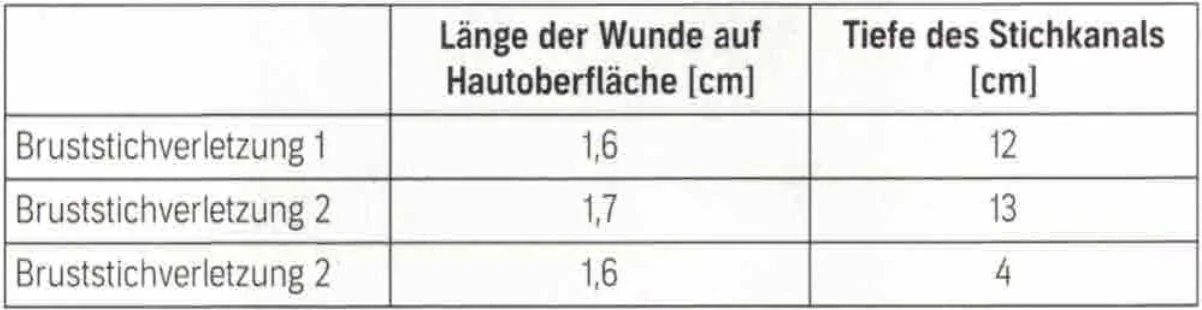
Abstract: A homeless man died during an attack by two other men due to three fatal chest stab wounds. The single and double-edged knives resp. their blade lengths did not correspond to the stitch channel depths. These channels had both pointed and blunt wound angles.

We were commissioned to investigate whether the dimensions of a stabbing channel allow conclusions to be drawn about the dimensions of the tool causing the stabbing and whether conclusions can be drawn about the number of cutting edges of the stabbing tool on the basis of a stitch channel. We carried out our investigations on the basis of a detailed summary of the known sources.

Keywords: stab wound, forensic biology, knives, wound angles.

CASE DESCRIPTION

According to police reports, two men attacked a homeless man, each with a knife. As a result, the victim suffered several stab wounds to his body; three chest stab wounds were fatal for him.

During a police search of the apartment, the murder knives were found in the kitchen sink of one of the attackers. The men’s legal representation asked us whether these knives could have caused the wounds to the victim, as the blade lengths of the knives did not appear to correspond to the stab insertions depths (Table 1), and the chest insertions had pointed and blunted wound angles. This would serve to classify the forensic findings. As we also work forensically with bloodstains, we agreed to provide an expert opinion [1-3].

The knives, described in the file as daggers, were described as follows:

- Dagger 1: 9.5 cm inside length, handle length 8 cm, blade sharpened on both sides (double-edged)

- Dagger 2: 9.5 cm inside length, handle length 8 cm, serrated blade and back of the knife (single-edged).

No information on the width of the knife blades was found in the files, but a blade width of approx. 1.2 cm could be estimated from blurred photos (Fig. 1). In the following report, we refer to the terms “length”, “width” and “depth” of a stab wound as shown in Fig. 2. For example, the length of a stab wound should not be confused with the depth of the insertion but refers to the length of the incision wound on the surface of the skin or organ.

We should check here in the sense of inclusion/exclusion of the knives found whether: a. the dimensions of a stab insertion allow conclusions to be drawn about the dimensions of the implement that caused it and b. the number of cuts made by the instrument can be deduced from a stab insertion.

As there was no other option for the client to get advice and it was a classic criminal investigation topic, we agreed to work on it.

Definitions of terms and information

Stab wound

In the case of a stab wound, a stab insertion is created by cutting through the tissue with a pointed or tapered implement that is mainly guided vertically to the surface of the body [6].

Cutting injury

In the case of a cutting injury, sharp longitudinal tissue cuts are created where an implement is guided parallel and/or tangential to the surface of the body [6].

Cleavage lines/Langer’s lines

Langer’s cleavage lines were described in 1861 by the Austrian anatomist Karl Langer with reference to an observation by the physician Guillaume Dupuytren; they are therefore also known as Langer’s lines. They correspond to the natural alignment of the collagen fibers (elastic fibers) of the dermis (dermis, located directly under the epidermis) [7]. Their arrangement in individual skin areas varies; they run in the direction of the least elasticity of the skin (Fig. 3).

The shape of the stabbing implement in the skin/organ created at the moment of impact can be changed by skin tension and the direction of the cleavage lines (Fig. 4). Injuries in the direction of the cleavage lines are less gaping, as the skin is stabbed in parallel to the elastic fibers. If these fibers are cut crosswise, however, a gaping wound occurs [6]. A gaping, slit-shaped skin incision can also be caused by a circular stabbing implement owing to the dependence of the wound shape on the position of the incision in relation to the cleavage lines [5, 7].

Byard et al. (2005) describe two cases in this regard [10]: In case 1, owing to the rectangular shape of the wound, a rectangular or square tool is initially assumed to be the cause of the wounds (Fig. 5). As the skin tension ceased after death, the stab wounds changed during the autopsy and resembled “typical” knife wounds (Fig. 5). In case 2, circular defects turn into slit-like defects due to skin tension (Fig. 6).

Triangular and square objects, on the other hand, tend to leave characteristic, i.e. triangular or square, wounds (Figs. 7, 8) [7].

Reconstructions and classifications to objects

The classification of an implement used to cause an injury is difficult and sometimes not clearly feasible. It is therefore wrong to assume that stabbing implements without a cutting or sharp edge leave cross-sectional wound openings on the skin or organs. Circular tools, for example, do not necessarily leave circular injury patterns: A circular instrument can leave a slit-shaped opening in the skin that is initially indistinguishable from a knife wound (compare cases of [10]). The shape, length and width of the skin slit are based on the cleavability of the skin cut and thus on the alignment of the Langer’s lines (see also Figs. 3, 4) [9].

Reconstruction of the implement’s shape based on the wound

Wound angles are often characteristically shaped (Fig. 9): Single-edged, incisal wound angles are pointed. Knives with a rounded, angular or V-shaped back often leave a bifurcated (forked) wound angle (Figs. 7, 8, 10) [5].

However, this kind of bifurcated wound angle on the side of the implement’s cutting edge can also be caused by an (even slight) change in the blade axis during insertion, as the knife has changed its position as it is removed. This means that in these cases it is no longer possible to deduce the shape of the instrument from the stab wound or the angle of the wound [5, 6] (Figs. 10, 11). If a knife is used to make several piercings one after another, the same knife may leave first a stab and then a cut in the skin. The overall appearance of the wound can vary and depends on the course of the Langer’s lines.

Sometimes it is even difficult to tell whether the stab wounds were suicidal or caused by another person [14]. The shape of a stab wound may allow conclusions to be drawn as to whether the knife had one or two cutting edges (Fig. 12). However, if this cannot be clearly determined from the stab insertion and the injury, this does not mean that the knife was not double-edged or single-edged [7].

Single-edged knives with sharp back edges that are not cutting edges can cause wounds that are indistinguishable from wounds caused by multi-edged stabbing implements [9].

A wide knife back leaves a square or blunt wound angle due to its wider “cutting” side and an acute angle through the actual cutting side (Figs. 8, 13). The wide wound angle can tear open in a jagged manner with a very wide knife back. In this kind of case, it is difficult to draw conclusions from the shape of the injury as to the shape of the blade or the stabbing implement (Figs. 10, 14) [7].

If the instrument is rotated or pulled out on a different axis after piercing, it becomes even more difficult to draw conclusions about the shape of the implement; the edges of the wound may be serrated, triangular or wing-like in shape, etc. [7] (Fig. 11). As a rule, knives with a serrated edge or a forked tip rarely leave a clearly identifiable wound shape on the skin. If the insertion line runs along a bone, for example, this can result in conspicuous scratch-like abrasions arranged next to each other with similar spacing [5]. This is illustrated in Fig. 15: Here the knife edge was guided parallel to a rib so that the edge of the knife grazed the rib and the wavy pattern of the knife edge was reproduced on the rib and also in the tissue. The exact shape of the wound angle can often only be determined during the autopsy when the existing skin tension is relieved and joined together by pushing it together [5].

Reconstruction of the blade width based on the length of the incision

The measured length of the incision on the skin or organ surface does not necessarily indicate the width of the knife blade (Fig. 16). The reason for this is that the angle of entry can be diagonally different to the position of the cleavage lines (see above). With fixed knives, for example, the stab wound (the skin incision) is usually longer, but can occasionally appear narrower [9] (Fig. 12).

If the skin is additionally cut when the knife is pulled out of the wound – for example by movements of a body/the bodies and/or the blade during the act of crime – the stab wound is longer than the width of the blade; more precise information can be obtained from the three-dimensional (!) shape of the incision channel (Fig. 2) [6].

If the insertion implement is rotated during the stabbing, this can reduce the length of the incision opening. It can be dovetail-shaped, triangle-shaped, banana- or boomerang-shaped, polygonal, etc, (Figs. 10, 11). These shapes can arise when a horizontal movement sequence is added to a vertical one (Fig. 12) [5].

A tapered blade has different widths between the tip and the handle (Fig 17). If the entire length of the knife is not inserted into the body, the length of the incision channel will not correspond to the maximum width of the knife (Fig. 16) [5].

Reconstruction of the blade length based on the length of the stab insertion

The longitudinal axis of a stab wound is often not straight, owing to the movements usually carried out during the execution of the crime. The blade can sever tissue fibers of adjacent muscle groups in a contracted state: The tissue gapes apart. During the autopsy, however, the formerly contracted fibers are relaxed; the wound channel is interrupted by intact tissue layers or is interrupted in its longitudinal axis [5].

The ability of the skin to return (so-called retractability) to its normal state of tension (= resting state) must also be taken into account: If a knife is pulled out of a wound, the stab insertion can be a few millimeters shorter than the knife blade. The retraction is again dependent on the position of the incision in relation to the Langer’s lines and the elasticity of the tissue.

If the victim is stabbed with great force, the stab insertion can be longer than the length of the blade of the instrument used to commit the crime, as the tissue is pressed in and deformed by the forceful and rapid stabbing [5, 6, 8] (Fig. 18). This applies in particular to stabs in the abdominal area [5, 7]. It must also be taken into account that the knife is not always pushed in all the way to the handle [5, 7]. In this case, the stab insertion appears shortened compared to the examined blade.

The stab insertion can also appear angled if the muscles and connective tissue shift during the stabbing; sometimes the end of the stab insertion can no longer be determined [7].

Since stab insertions are measured during autopsy on bodies in a straight, stretched, relaxed and motionless position, they may not be comparable to the body position during a crime. However, statements about the course of the stabbing in soft tissue (from top to bottom, from bottom to top, etc.) depend on the posture of the victim and perpetrator at the time of the stabbing [7]. Stabs from top to bottom are often found mainly on the head, shoulders, upper body or thighs; stabs from bottom to top, on the other hand, are found in the abdominal and groin region [5].

CONCLUSION

Can conclusions be drawn about the dimensions of a dagger from the dimensions of a stab insertion?

It is sometimes possible to deduce the number of blades (here: sharpened on one or both sides) of a knife from the shape of the stab wound. However, if the stab insertion and injuries are not sufficiently distinct, it is not possible to determine whether the knife was double-edged or single-edged. Sometimes there are also three blades [11].

There are many factors that influence the dimensions (length, width, depth) of a stab insertion. These factors include the course of the cleavage lines at the incision site, the shape of the implement, a change in the blade axis during stabbing, movements of the bodies of the victim and/or perpetrator, multiple (stabbing) in one place, the combination of stabbing and cutting during the execution of the stab, the state of tension and relaxation of the skin/tissue while alive and dead, and the ability of the skin to be compressed and relax (ability to retract).

Wounds caused by single-edged knives with sharp back edges (which are not cutting edges) can resemble stabs from multi-edged stabbing implements too closely. It is then impossible to tell which implement with how many blades caused the stab wound.

Conflict of interest

The authors declare that they have no conflict of interest.

References

1. Benecke M, Barksdale L. Distinction of bloodstain patterns from fly artifacts. Forensic Sci Int. 2003;137:152-159.

2. Benecke M, Reibe S, Baumjohann K, Gulinski S, Wetzel W, Schmidt K, Preßler K, Lebküchner I, Streckenbach M. Zur Morphologie langsam beschleunigter Blutauftropfspuren [Morphology of low- velocity impact stains produced from single drops of blood]. Arch Kriminol. 2012;230(1-2):42-54.

3. Benecke M. Sicherung und Auswertung schwieriger Spuren: Blut-Schwitzen (Hämhydrose, Hemhidrosis) [Securing and evaluating difficult traces: blood sweating (hemhydrosis, hemhidrosis)]. Kriminal. 2019;6:364-368.

4. Zimmer G. Prüfungsvorbereitung Rechtsmedizin [Exam preparation in forensic medicine]. 2nd ed. Stuttgart: Georg Thieme Verlag KG; 2009.

5. Eisenmenger W. Spitze, scharfe und halbscharfe Gewalt [Pointed, sharp and semi-sharp force.]. In: Brinkmann B, Madea B, editors. Handbuch gerichtliche Medizin [Handbook of forensic medicine]. Berlin, Heidelberg, New York: Springer; 2004.

6. Madea B. Rechtsmedizin. Befunderhebung, Rekonstruktion, Begutachtung [Assessment, reconstruction, evaluation]. 3rd ed. Berlin, Heidelberg: Springer; 2015.

7. Mueller B. Gerichtliche Medizin [Forensic medicine]. Berlin, Göttingen, Heidelberg: Springer; 1953.

8. Cox HTT. The cleavage lines of the skin. Brit J Surgery 1941;29(114):234-240.

9. Prokop O. Lehrbuch der gerichtlichen Medizin [Manual of forensic medicine]. Berlin: VEB Verlag Volk und Gesundheit; 1960.

10. Byard RW, Gehl A, Tsokos M. Skin tension and cleavage lines (Langer’s lines) causing distortion of ante- and postmortem wound morphology. Int J. Legal Med. 2005;119:226-230.

11. Kiehne K. Das Flammenwerferattentat von Köln-Volkhoven [The flamethrower attack in Cologne-Volkhoven]. Arch Kriminol. 1965;136:61-75.

12. Gall JAM, Boos SC, Payne-James JJ, Culliford EJ. Forensic medicine: color guide. New York: Churchill Livingstone; 2003.

13. Madea B, Dettmeyer B. Basiswissen Rechtsmedizin [Basic knowledge of forensic medicine]. Heidelberg: Springer Medizin; 2007.

14. Neumann M, Grellner W. A complex suicide with over 250 sharp force injuries and falling from height. Leg Med. (Tokyo) 2025;75:102631.

15. Pollak S, Saukko P. Atlas of forensic medicine. CD-ROM. Amsterdam: Elsevier; 2003.

Erkenntnisgewinn durch Mageninhalt

Quelle: Archiv für Kriminologie, Band 256, Heft 3 und 4, Sept./Okt. 2025, Seiten 109 bis 125

Der Artikel als pdf

Der Artikel auf englisch

Von Dipl.-Biol. Kristina Baumjohann und Dr. rer. medic. Dipl.-Biol. Mark Benecke

Zusammenfassung

Mageninhalt kann in Grenzen – zusammen mit rechtsmedizinischen Verfahren – zur Bestimmung des Todeszeitpunktes herangezogen werden. Die zwei hier vorgestellten Fälle wie auch die Literatur zeigen darüber hinaus, dass Mageninhalt zur Überprüfung von Aussagen und weiteren Fragestellungen in Kriminalfällen geeignet sein kann.

Schlüsselwörter: Mageninhalt, Todeszeitbestimmung, Aussagen, Informationsgehalt

Abstract

Stomach contents can — together with other forensic medical methods — be used to narrow down time since death. Two cases presented here as well as the scientific literature show the use of the method to verify statements and further questions related to criminal investigations. This potential source of information should therefore not be neglected.

Keywords: stomach contents, determination of time of death, statements, information content

Einleitung

Rechtsmedizinische Untersuchungen vom Mageninhalt bei Verstorbenen werden seit über hundert Jahren durchgeführt. Corin untersuchte bereits 1898 auch bei Lebenden die Magenverweildauer von Kaffee [1]. Drei Jahre später führte Farrai (1901) Untersuchungen zur postmortalen Verdauung von Eiweiß an Hunden durch [2]. Aufgrund des Weitertransports von Nahrung im Magen nach Eintritt des Todes stuft er diese Methode zur Todeszeitberechnung als ungeeignet ein. Zur postmortalen Verdauung wurden in den letzten Jahrzehnten verschiedene (Tier-)Experimente durchgeführt [3, 4]. Auch Merkel (1922) wies in seiner Arbeit eine mögliche Weiterverdauung nach Todeseintritt nach, hielt sie jedoch aufgrund der geringen Menge für unbedeutend [5]. Madea et al. (1986) bestätigten dies in einem Tierexperiment [6]. Henssge & Madea (2004) wiesen auf die bakterielle Zersetzung der Nahrung nach Eintritt des Todes hin [7].

Sorge (1904) befürwortete das Heranziehen des Mageninhaltes um Informationen zum Todeszeitpunkt zu gewinnen [8]. Nach Holczabek (1961) sollten auch Dünn- und Dickdarminhalte als Informationsgeber für den Zeitpunkt der letzten Mahlzeiten und deren Zusammensetzung verwendet werden [9].

Abbildung 1 Mageninhalt mit überwiegend körnerartigen Bestandteilen

Sofern der Zeitpunkt zwischen letzter Nahrungsaufnahme und Eintritt des Todes wie auch die Speisenzusammensetzung bekannt sind, kann der Mageninhalt – neben weiteren rechtsmedizinischen Methoden – grobe Anhaltspunkte zum Todeszeitpunkt liefern.

Der Mageninhalt kann darüber hinaus jedoch interessante Hinweise zu den Todesumständen liefern. Steht der Todeszeitpunkt nicht genau fest oder kommen mehrere Zeiten in Frage, kann der Mageninhalt diesen näher eingrenzen („früher“, „später“), die Art der Mahlzeit bzw. die Einordnung von Tageszeiten (z.B. Frühstück, Mittagessen), Orte der Nahrungsaufnahme (z.B. bestimmtes Essen eines Restaurants, Besuch bei Freunden usw.), Überprüfung von Aussagen und Einordnungen zur zeitlichen Rekonstruktion sollte nicht vernachlässigt werden [7].

Die Aussagekraft des Mageninhalts ist nicht nur im Zusammenhang mit rechtsmedizinischen Untersuchungen interessant. Auch andere medizinische und wissenschaftliche Bereiche haben hierzu Forschungen getätigt: Püschel (1996), Petring & Blake (1993) wie auch Nygren et al. (1995) untersuchten die Magenentleerung im Zusammenhang mit der Anästhesie vor Operationen („Nüchternheit“) [10-12].

Grover & Camilleri (2013) gingen dem Einfluss von Antidepressiva bei Reizmagen und Reizdarmsyndrom auf die Magentätigkeit nach [13]. So beeinflusst etwa Buspiron die Fähigkeit des Magens sich zu entspannen, was wiederum für die Nahrungsaufnahme (Volumenvergrößerung) notwendig ist, während trizyklische Antidepressiva eine Magenentleerung verzögern. Diese Befunde können auch für rechtsmedizinische Fragestellungen interessant sein.

Im archäologischen Zusammenhang analysierten Dickson et al. (2000) den Dickdarm-Inhalt der Gletscher-Mumie „Ötzi“ mittels Isotopenanalyse, um die damalige Ernährungsweise zu erforschen [14].

Pflanzliche Fragmente können neben archäologischen Hinweisen auch kriminalistische Anhaltspunkte geben: Der Nachweis von Diatomeen (Kieselalgen) im Magen kann auf einen Tod durch Ertrinken hinweisen [15, 16].

Neben Speiseresten sind auch andere Substanzen im Magen aufschlussreich: Lang (2015) fand bei einigen Brandleichen Rußpartikel und Kohlenstoffmonoxid im Magen, die er als Vitalitätszeichen während des Brandgeschehens deutete [17].

Nicht vom Mageninhalt bedingte Einblutungen in der Magenschleimhaut können – neben anderen Befunden – auf einen Kältetod hinweisen [18-22]. Diese Einblutungen werden auch Wischnewski-Flecken [19, 22] genannt (oder Wichniewski [21] oder Wischnewsky-Flecken [18]).

Abbildung 2 Samenartige Körnchen aus dem Magen.

Pope (2012) berichtet von einem während eines Überfalls erschossenen Räuber dessen Mageninhalt zur Identifizierung seines entflohenen Komplizen führte [23]. Im Magen des Verstorbenen fanden sich typische Burger-Reste (Hackfleisch, Käse, Speck) und Pommes frites. Ein Kartoffelstäbchen war unverdaut und ließ darauf schließen, dass die Mahlzeit nicht länger als eine Stunde vor Todeseintritt gegessen wurde. Die Gerichtsmedizinerin konnte die Pommes frites aufgrund ihrer stärkeren Dicke einer bestimmte Fast Food-Kette zuordnen, von der sich eine Filiale in unmittelbarer Nähe zum Tatort befand. Das Überwachungssystem des Geschäfts zeigte den verstorbenen Räuber mit seinem Komplizen, der identifiziert werden konnte.

In einem Fallbericht von Kerscher et al. (2024) wurde ein 70jähriger Mann in einer Sauna ohnmächtig und zog sich Verbrennungen dritten Grades zu [24]. Er verstarb 11 Tage später in einem Brandverletzten-Zentrum. Sein Magen enthielt etwa 200 ml eingedickten Brei mit groben pflanzlichen Bestandteilen, die weder im Zwölffingerdarm noch in den folgenden Darmabschnitten zu finden waren. Der Mageninhalt musste daher die letzte Mahlzeit gewesen sein, die der Mann vor dem Saunagang zu sich genommen hatte. Das vollständige Ausbleiben der Magenentleerung über elf Tage wird hier erstmals beschrieben. Die Autoren zweifeln die Verwendung des Mageninhalts an, um Rückschlüsse auf das Zeitintervall zwischen letzter Nahrungsaufnahme und Tod ziehen zu können.

Von einem ähnlichen Fall berichtet Püschel (1996) [12]: Ein 15jähriger Junge erlitt fünfzigprozentige Verbrennungen der Körperoberfläche und starb nach10-tägiger intensivmedizinischer Behandlung an einer Sepsis. In seinem Magen fanden sich grüne Bohnen, die er vor den Verbrennungen zu sich genommen hatte.

Verletzungen und Erkrankungen des Verdauungstraktes können offenbar die Magenverweildauer von Nahrungsbestandteilen auf unbekannte Zeit verlangsamen oder sogar stoppen. Dies verdeutlicht Püschel (1996) anhand eines weiteren Falls: Ein 52jähriger Alkoholiker starb durch Bolustod nach 14tägiger Behandlung eines ausgedehnten subduralen Hämatoms [12]. Er wurde währenddessen ausschließlich künstlich ernährt. Ein 3x10 cm dicker Nahrungsbrocken aus dem Magen versperrte den Kehlkopfeingang und hatte im Magen über 14 Tage verweilt, ohne weiter transportiert und verdaut worden zu sein.

Auf einen Stillstand der Magenentleerung bei schwerem Schädel-Hirn-Trauma weist auch Tröger (1987) hin [25]. In der rechtsmedizinischen Praxis sollte in derartigen Fällen darauf geachtet werden, dass es „keine ,,sichere" Zeitgrenze bezüglich einer stattgehabten Magenentleerung gibt.“ (Püschel 1996) [12].

Tablettenreste im Magen-Darminhalt können eine Vergiftung und weitere Informationen zu den Todesumständen (z.B. Suizid) nachweisen [26]. Hierzu müssen Menge und Zusammensetzung der eingenommenen Substanz(en) bekannt sein. Neben der chemischen Analyse der Stoffe kann die Art und Menge bestimmter Hilfs- bzw. Füllstoffe in Tabletten (z.B. Arten von Stärke und Cellulose) mit einem Polarisationsmikroskop untersucht werden. Diese Methode ist auch auf Tablettenreste in Gläsern, in Flüssigkeitsresten, in eingeatmeter Flüssigkeit oder in Erbrochenem anzuwenden.

Singh et al. (2016) berichten von einem Mord an einer jungen Frau [27]. Während der polizeilichen Untersuchungen machten sowohl ihr Ehemann und dessen Bruder wie auch ihr eigener Bruder widersprüchliche Angaben. Anhand des Mageninhalts – halb verdauter Reis – wurden die Aussagen der Männer überprüft: Die Frau nahm den Reis ca. zwei bis drei Stunden vor Todeseintritt zu sich. Dieser Befund widerlegte die Aussagen des Ehemanns und dessen Bruder.

Abbildung 3 Pflanzenbestandteile aus dem Magen.

In einem anderen Fall konnte der Mageninhalt ebenfalls zur Überprüfung von Aussagen herangezogen werden: Pieri et al. (2018) untersuchten die Proteine im Magen eines 40jährigen Patienten, der offenbar an den Folgen eines Sturzgeschehens gegen 9 Uhr morgens in einer Klinik verstarb [28]. Die Krankenschwestern sagten aus, der Mann habe das Frühstück verweigert. In seinem Magen des Verstorbenen wurden 350 g einer weißlichen, halbflüssigen Masse gefunden. Eine Untersuchung der darin enthaltenen Eiweiße zeigte, dass es sich um verdaute Milch- und Brotproteine handelte, die vom Frühstück desselben Tages stammten. Durch den Widerspruch zwischen den rechtsmedizinischen Befunden und den Aussagen des Personals wurden Ermittlungen zur möglichen Verletzung der Aufsichtspflicht eingeleitet.

Die Zusammensetzung des Mageninhalts kann auch aufgrund seiner physikalischen Eigenschaften Informationen liefern: Gotsmy et al. (2018) und Jackowski (2023) weisen auf den charakteristischen dreischichtigen Mageninhalt in Fällen von Ertrinken hin [29, 30]. Aufgrund der Aufnahme verschieden großer Mengen an Wasser setzt sich dieses zuoberst ab (sog. „Wydler’s Sign“) und kennzeichnet Ertrinkungstode. Fälle ohne Ertrinken zeigen einen zweischichtigen Mageninhalt.

Gotsmy et al. (2018) weisen in diesem Zusammenhang auf mögliche abweichende Befunde zur Anzahl der Schichten des Mageninhalts zwischen PMCT (postmortalem CT) und der rechtsmedizinischen Untersuchung hin [29]. Vermutlich sind diese auf die Technik zur Entnahme des Mageninhalts im Obduktionssaal wie auch auf Bewegung des Leichnams bei der Obduktion oder vor / nach der PMCT zurückzuführen.

Der Untersuchung des Mageninhalts geht die Identifizierung der Nahrungsbestandteile voraus, die bei stark verdauten Speisen schwierig sein kann. Baur et al. (1982) zeigen wie man anhand von Doppeldiffusionstests und der Anwendung bestimmter Seren zwischen Milch und Käse unterscheiden kann [31]. Pflanzliche Bestandteile sind verschiedenartig aufgebaut und teils schwer zu bestimmen. Die Arbeit von Spann (1978) [32] und das Labor-Handbuch von Bock et al. (1980) [33] sind unserer Erfahrung nach gute Nachschlagewerke zur Erkennung pflanzlicher Zellen.

Verschiedene Faktoren beeinflussen die Entleerungsrate des Magens und den Verdauungszustand von Speisen. Wasser wird schneller entleert als Kohlenhydrate [11] und letztere wiederum schneller als Mischkost [26]. Dabei verlangsamt sich die Entleerung mit steigendem Gehalt an Kohlenhydraten und Triglyceriden [34].

Neben dem Fett- und Energiegehalt sowie dem Volumen bzw. Gewicht einer Mahlzeit [7, 35-37] spielen auch physikalische und chemische Beschaffenheit der Nahrungsmenge (z.B. Temperatur, pH-Wert) eine Rolle [38].

Jatti et al. (2010) nennen drei Kategorien einflußnehmender Faktoren auf die Magenentleerung: psychische, physiologische und anatomische Umstände [38].

Da die Magenentleerung neben überwiegend physiologischen Faktoren auch durch Emotionen gesteuert wird, sind letztere besonders in Kriminalfällen bedeutsam, da die Entleerung durch Wut und Aggression beschleunigt, durch Depression, Angst und Stress verlangsamt oder auch über das parasympathische System bei Schock, Angst oder Kopfverletzungen sogar gestoppt und die Herstellung von Magensäure einstellt werden kann [35, 36, 38-40]. Dann kann unverdaute Nahrung nach sogar 24 Stunden im Magen vorgefunden werden (Jatti et al. 2010) [38].

Weitere einflußnehmende Faktoren und deren Wirkung auf die Magenentleerung sind Tabelle 1 zu entnehmen.

Abbildung 4 pH-Wert-Bestimmung des Mageninhalts

Weitere tabellarisch aufgelistete Faktoren auf die Magenentleerung sind bei Henssge & Madea (2004) [7], Jaffe (1989) [45] und Legge et al. (2016) [36] zu finden.

Zur Dauer der Entleerungsraten des Magens gibt es unterschiedliche Angaben: Nach Patel et al. (2013) ist der Magen grundsätzlich nach 2,5-6 Stunden geleert [46], Grassberger & Schmid (2009) geben 2-4 Stunden mit einer großen Schwankungsbreite an [47], nach Kaul et al. (2017) dauert die Entleerung 4-6 Stunden [48]. Letztere untersuchten die Entleerungsrate(n) in 507 Fällen mit bekanntem Todeszeitpunkt und bekannter letzter Mahlzeit. Zwar erwies sich hier der Verdauungszustand der Speisen als bedeutsam bei der Berechnung des Todeszeitpunkts; dieser sollte jedoch nur im Zusammenhang mit weiteren Faktoren zur Berechnung der postmortalen Liegezeit (postmortales Intervall, PMI) gesehen werden.

Auch für Grassberger & Schmid (2009) ist die alleinige Abschätzung des Todeszeitpunkts anhand des Füllzustands des Magens und der Nahrungszusammensetzung nicht ausreichend genau [47]. Verständlich wird dies durch die oben aufgeführten Faktoren, die die Magenentleerung beeinflussen.

Wir stellen zwei Fälle aus unserer Sachverständigen-Praxis vor, in denen der Mageninhalt Verstorbener sowohl Rückschlüsse auf die zeitliche Einordnung des Todeseintrittes als auch die Überprüfung von Aussagen zuließ.

1. Fall 1

Ein Ehepaar wurde zwei bis drei Tage gefangen gehalten und ermordet. Wir wurden mit der Fragestellung beauftragt, wann der verstorbene Mann die in seinem Magen vorgefundene Mahlzeit zu sich genommen hatte.

1.1 Methoden & Befunde

Der Mageninhalt wurde in einem ca. 8 cm hohem und ca. 5 cm durchmessenden PE-Gefäß in einem Styropor-Kistchen mit Kühlelementen geliefert und bei Anlieferung eingefroren (3-Sterne-Gefrierfach).

Zwei Stunden vor Untersuchungsbeginn wurde der 53 g wiegende Mageninhalt (Feinwaage Kern 440-35N) bei Raumtemperatur aufgetaut und in zuvor mit Brennspiritus ausgewischte Petrischalen überführt.

Unter dem Binokular (Leica Mz 12.5) wurden 20 g des überwiegend tief dunkelgrau gefärbten Mageninhalts näher untersucht und Stücke nach Farbe, Form und Größe geordnet (Abb. 1).

Es konnten sieben Gruppen von relativ einheitlichen, noch gut erkennbaren, Bestandteilen auseinander sortiert werden:

1. Grobe, um einen Zentimeter lange, weiche, ,,gelatinöse", deutliche Schnittkanten aufweisende Stücke.

Abbildung 5 Schlund-Inhalt mit drei Bröckchen.

2. Größere, über einen Zentimeter messende „gelatinöse", meist scharf begrenzte (deutliche Schnittkanten aufweisende) Stücke.

3. Samenartige Körnchen von etwa zwei Millimetern Durchmesser mit glatter oder mit kleinen Eindellungen versehener Oberfläche: Zwei verschiedene Arten von Samen oder Körnern (Abb. 2).

4. Samenartige Körnchen von etwa fünf Millimetern Länge und drei Millimetern Breite, rötlich-braun.

5. Weiche, helle, einfach längsgefurchte, ca. drei bis vier Millimeter Breite und ca. sechs Millimeter lange Bestandteile.

6. Größere, teils lappige, mögliche Hüllen, wohl von Pflanzenbestandteilen.

7. Kleinere, rötlich braune Hüllen wohl von Pflanzenbestandteilen sowie ein einzelner birnenförmiger Bestandteil (Abb. 3).

Zur pH-Messung mit Universalindikator MERCK (pH 0-14) wurde dem verbleibenden Mageninhalt vier ml steriles, destilliertes Wasser aufgetropft. Der angezeigte pH-Wert (zwischen pH 3 und 4: sauer) wies auf eine saure und für den Magen normale Umgebung hin (Abb. 4).

1.2 Einordnung der Befunde

Die glasig-gelatineartigen Strukturen (Gruppe 2) wurden von einem von uns hinzugezogener Botaniker als Feigenbestandteile eingeordnet. Dies stimmte mit der später getroffenen polizeilichen Mitteilung überein, dass eine Packung mit getrockneten Feigen am Fundort angetroffen wurde.

Die vorwiegend drei bis fünf Millimeter lange pflanzlich-körnerartige Strukturen (wie beispielsweise aus einem Körnergericht oder -brot) (Gruppen 3, 4) waren mit dem später mitgeteilten Fund einer Müslipackung am Fundort vereinbar.

Abbildung 6 Bohnenstücke aus dem Magen. Maßstab: cm und mm

Bei den aus Gruppe 5 mitgeteilten Bestandteilen sah der Botaniker eine Ähnlichkeit zu ungeschälten Körnern von Weizen, Roggen, Gerste oder Hafer in Abgrenzung zu Graupen, bei denen es sich um geschälte Getreidekörner handelt.

1.3 Umgebungseinflüsse

Es ist von einigen Pflanzenbestandteilen bekannt, dass sie im Magen nicht zersetzt werden (müssen), sondern den Darm passieren und unverdaut ausgeschieden werden können. Dazu zahlen vor allem Körner und andere, wenig wasserhaltige pflanzliche oder auch wenig zerkaute Bestandteile.

Nach unserer bisherigen Erfahrung mit Mageninhalten erschien es uns ungewöhnlich und interessant, dass die oben angesprochenen weichen, aber dennoch scharf begrenzten, wie mit Schnittkanten versehenen Bestandteile des Mageninhaltes (noch) vorhanden waren. Dies deutet normalerweise darauf hin, dass die Zersetzung der Nahrung nicht lange angedauert hat.

Einflüsse wie hastiges Schlingen (und damit nur wenig Kau- und Einspeichelungstätigkeit) [5] sowie die Frage, ob die Person regelmäßig Mahlzeiten zu sich genommen hat, müssen in dem hier vorliegenden Fall (Entführung mit Mord) berücksichtigt werden.

Laut Literatur führen auch Stress und Angst dazu, dass die Verdauungstätigkeit im Magen verlangsamt wird [38]. Dies scheint hier auch der Fall zu sein: Nach unseren Informationen war die ermordete Person mehrere Stunden lebend in der Gewalt des Täters.

Eine vergleichbare Wirkung hat auch ein länger andauernder Todeskampf. Dies scheint hier jedoch nicht zuzutreffen. Nach unseren Informationen lag im Herzen flüssiges Blut vor, das von den rechtsmedizinischen Kolleginnen als Hinweis auf einen raschen Sterbevorgang gedeutet wurde.

1.4 Zeitpunkt des Todes

In der medizinischen Literatur wird in der Regel davon ausgegangen, dass gegessene Nahrung ungefähr zwei bis sechs Stunden im Magen verbleibt und danach in den Darm abtransportiert ist [46 – 48].

Abbildung 7 Kleineres Bohnenfragment aus dem Magen. Maßstab: mm

In einer Untersuchung von Patel et al. (2013) von 100 Mageninhalte von Leichen zeigte sich, dass die Anwesenheit von noch identifizierbaren Nahrungsbestandteilen auf eine Zeit seit dem Essen von weniger als 2 Stunden hindeutet [46]. Angesichts der erkennbaren Schnittkanten im uns hier vorliegenden Mageninhalt würden wir eine Zeit seit Nahrungsaufnahme von etwa 2 Stunden bis höchstens 6 Stunden annehmen. Die genannten, in diesem Fall wohl einflussnehmenden Faktoren müssen berücksichtigt werden.

2. Fall 2

Ein Mann verstarb im Pflegeheim während des Abendessens. An diesem Tag nahm der Verstorbene folgende Speisen zu sich: Zum Frühstück soll er nur einen Kaffee getrunken und nichts gegessen haben. Mittags gab es Rinderrouladen mit Nudeln, Kaisergemüse und Rhabarberkompott. Angeblich soll er hiervon nur wenig zu sich genommen haben. Zum Abendessen gab es Gelbwurst, Käse, Bohnensalat, Brot (Graubrot oder dunkles Vollkornbrot) und Butter. Laut Betreuerin soll der Verstorbene abends zwei Scheiben Brot mit Wurst gegessen haben. In einem unbeaufsichtigten Moment hatte er sich möglicherweise eine Scheibe Brot mit Butter in den Mund steckt und war daran erstickt.

Wir wurden um eine morphologische Untersuchung der Speisereste aus seinem Rachen und Magen gebeten, um „mit hinreichender Sicherheit [festzustellen], welche Speisen der Verstorbene unmittelbar vor seinem Ableben zu sich genommen hat“.

2.1 Methoden & Befunde

Proben aus Rachen und Magen erhielten wir getrennt voneinander und ungekühlt in zwei Plastikgefäßen mit Deckel, die unmittelbar nach ihrer Ankunft bis zur Untersuchung in einem 3-Sterne-Gefrierfach tiefgefroren wurden.

2.2 Racheninhalt

Der etwa sechs Gramm schwere Racheninhalt (Waage: Philipps HR2385/A) war bräunlich, flüssig (Abb. 5). Drei erkennbar große Bröckchen waren innen weiß und außen von einer schmutzig dunkelgrauen Schicht umhüllt; die Konsistenz ähnelte Frischkäse.

Festere Bestandteile waren nicht erkennbar.

Insgesamt war die Flüssigkeit des Racheninhaltes recht dunkel gefärbt, was evtl. auf dunkle Vollkornbrot hinweisen könnte. Die hellen Bestandteile könnten von Käse stammen.

Abbildung 8 Mögliche fettige Bestandteile im Mageninhalt. Maßstab: cm und mm

2.3 Mageninhalt

Der deutlich hellere Mageninhalt wog ca. 230 g und wies einzelne größere, festere Bestandteile auf, die aufgrund ihrer Farbe und ihrem Aussehen länglichen Bohnen-Abschnitte ähnelten (Abb. 6).

Andere festere Bestandteile waren nicht vorhanden.

Der die Stücke umgebende Mageninhalt war vollständig einheitlich cremig-breiig mit kleinen weißen Einsprengseln (unter einem Millimeter); es fand sich ein einzelnes millimetergroßes eckiges Stück wie von einem grünen Kraut oder Gemüse.

Der Mageninhalt wurde lichtmikroskopisch bei 60facher Vergrößerung untersucht (Binokular: Leica MZ 12.5): Bei den Stückchen handelte es sich vermutlich um ein Stück Bohne, da Dicke und Farbe den anderen Stücken glichen. Insgesamt wurden aus dem Mageninhalt 19 mögliche Bohnenstücke mit Längen zwischen 5 mm und 21 mm gesichert (Abb. 7).

Ein süßlicher Geruch wie von erbrochenem Kakao war wahrzunehmen; dies könnte aber auch auf die Zersetzung von Zuckerbestandteilen (Kohlenhydraten) aus Brot zurückzuführen sein.

Bei achtfacher Vergrößerung der Bohnenstücke waren darauf zahlreiche kleine weiße Bestandteile zu erkennen. Diese weißen Partikel waren mit der Pinzette sehr leicht zerdrückbar; es könnte sich dabei beispielsweise um Käse mit nennenswertem Fettanteil handeln (Abb. 8). Kleine grünlich-rötliche bis bräunliche sehr dünne Plättchen könnten von Kräutern stammen.

Die pH-Wert-Messung der Proben wurde mit pH-Indikator-Stäbchen der Firma MERCK (pH 0-14) durchgeführt. Leitungswasser als Nullprobe zeigt pH 7 an, der Schlundinhalt lag bei pH 3-4, der Mageninhalt lag ebenfalls bei pH 3-4.

Ein Blut-Schnelltest mittels Bayer Hemastix (Charge: 6H18A) zeigte im Magen- und Schlundinhalt eine Blutmenge von mehr als 80 Erythrozyten pro Mikroliter (Abb. 9). Der Test zeigt extrem sensitiv, an so dass schon allerkleinste Spuren von Blut – auch extrem verdünnte Mengen – das Anschlagen des Tests bewirken.

2.4 Einordnung der Befunde

Der saure Schlundinhalt kann entweder auf die Speisen selbst zurückzuführen sein (Essig o.ä.), oder daran, dass die Person Magensäure aufgestossen oder gewürgt hat. Auch mögliche bakterielle Zersetzungsvorgängen während des Transportes könnten auf den pH-Wert eingewirkt haben, da die Proben bei uns nicht tiefgefroren eintrafen.

Die im Magen vorhandene Blutmenge muss nicht zwingend verletzungsbedingt entstanden sein. Es kann auch durch das Sektionsbesteck, Handschuhe oder Lagerungs-Gefäße aus dem Sektionsraum eingebracht worden sein.

Ein Tropfen Mageninhalt mit den bereits beschriebenen weisslichen, kleinen Partikeln sowie trockenkräuterartige Plättchen und Luftblasen (wohl durch Gärungsvorgänge) zeigte bei hundertfacher Vergrößerung mit dem Binokular die zahlreichen weißen Partikel, ähnlich einer Fett-Emulsion.

Abbildung 9 Blut-Schnelltest

Eine feingewebliche (histologische) Untersuchung erschien angesichts des sehr homogenen und gut untersuchbaren Materials nicht zwingend erforderlich, da keine auf den ersten Blick eigentümlichen oder nicht mit dem bisher Beschriebenen in Einklang stehenden Bestandteile im übersendeten Material zu erkennen waren.

Der Mann verstarb offenbar während der Einnahme des beschriebenen Abendessens.

3. Zusammenfassung

Mageninhalt sollte nicht alleinig zur Bestimmung des Todeszeitpunktes herangezogen werden. Unsere vorgestellten Fälle und die wissenschaftlichen Fallberichte zeigen jedoch, dass er zur Überprüfung von Aussagen und anders gelagerter Fragestellungen in einem Kriminalfall geeignet sein kann und sein möglicher Informationsgehalt daher nicht vernachlässigt werden darf.

Literatur

  1. Corin G (1898) De quelques particularités de la digestion stomacale au point de vue médico-légal. Arch Anthrop Crim 13: 469-482

  2. Farrai C (1901) Über postmortale Verdauung. Vjschr Gerichtl Med 21: 240-254

  3. Forster B, Hummelsheim G, Döring G (1965) Tierexperimentelle Untersuchungen über die postmortale Magenperistaltik bei Leuchtgas- und Parathion-Vergiftung. Dtsch Z Gerichtl Med 56: 148-159

  4. Joachim H (1976) Probleme der frühen Todeszeitbestimmung und die sogenannten supravitalen Reaktionen des Muskels im Tierversuch. Habilitations-Schrift, Freiburg

  5. Merkel H (1922) Über Mageninhalt und Todeszeit. Dtsch Z Gerichtl Med 1: 346-358

  6. Madea B, Oehmichen M, Henssge C (1986) Postmortaler Transport von Mageninhalt? Z Rechtsmed 97: 201-206

  7. Henssge C & Madea B (2004) Mageninhalt und Todeszeit. In: Brinkmann B, Madea B (Hrsg.) Handbuch gerichtliche Medizin Band 1. Springer, Heidelberg, S 112-117

  8. Sorge A (1904) Die Verwertung des Mageninhaltes zur Bestimmung der Todeszeit und der Zeit der letzten Nahrungsaufnahme. Z Med-Beamte 17: 373-390

  9. Holczabek W (1961) Zur Untersuchung des Magen-Darmtraktes für die Todeszeitbestimmung. Beitr Gerichtl Med 21: 23-27

  10. Nygren J, Thorell A, Jacobsson H, Larsson S, Schnell PO, Hylen L, Ljungqvist 0 (1995) Preoperative gastric emptying. Effects of anxiety and oral carbohydrate administration. Ann Surg 222(6): 728-734

  11. Petring OU, Blake DW (1993) Gastric emptying in adults: an overview related to anaesthesia. Anaesth Intensive Care 21: 774-781

  12. Püschel K (1996) Nüchternheitsgebot und Aspirationsprophylaxe aus rechtsmedizinischer Sicht. AINS 31(4): 249-250

  13. Grover & Camilleri (2013) Effects on gastrointestinal functions and symptoms of serotonergic psychoactive agents used in functional gastrointestinal diseases. J Gastroenterol 48:177-181

  14. Dickson JH, Oeggl K, Holden TG, Handley LL, O’Connell TC, Preston T (2000) The omnivorous Tyrolean Iceman: colon contents (meat, cereals, pollen, moss and whipworm) and stable isotope analyses. Philos Trans R Soc B 355, 1843-1849

  15. Miller J (2017) Forensic botany and stomach contents analysis: established practice and innovation. In: Schotsmans EMJ, Márquez-Grant N, Forbes SL (ed) Taphonomy of human remains: forensic analysis of the dead and the depositional environment. John Wiley & Sons Ltd, pp 187-200

  16. Ranner G, Juan H, Udermann H (1982) Zum Beweiswert von Diatomeen im Knochenmark beim Ertrinkungstod. Z Rechtsmed 88: 57-65

  17. Lang J (2015) Erhebung von Todesursachen in Brandtodesfällen. Medizinische Fakultät der Martin-Luther-Universität Halle-Wittenberg, Dissertation

  18. Dettmeyer RB , Verhoff MA (2011) Rechtsmedizin. Springer Medizin Verlag Heidelberg, S 95

  19. Dietz G (1970) Gerichtliche Medizin. Johann Ambrosius Barth Leipzig, S 137

  20. Duma S, Mele F, Calvano M, Leonardelli M, Macorano E, De Gabriele G, Cristalli A, Marzullo A, Introna F (2024) Death by frostbite: from theory to reality: a case report. Forensic Sci 4: 555-565

  21. Hofmann, von E, Haberda Albin, Wagner-Jauregg Julius (1927) Lehrbuch der gerichtlichen Medizin mit gleichmässiger Berücksichtung der deutschen u. österreichischen Gesetzgebung, 11. Auflage, Urban & Schwarzenberg, Berlin Wien, S. 752

  22. Prokop, O (1960) Lehrbuch der gerichtlichen Medizin. VEB Verlag Volk und Gesundheit Berlin, S 126

  23. Pope L (2012) Identification of a second suspect via stomach contents at autopsy. JACR18(2): 13-15

  24. Kerscher SR, Kern N, Chistiakova N, Verhoff D, Verhoff M (2024) Lack of gastric emptying at autopsy eleven days after head trauma in the sauna– a forensic autopsy case report. Forensic Sci Med Path DOI 10.1007/s12024-024-00931-3

  25. Tröger HD, Baur C, Spann WD (1987) Mageninhalt und Todeszeitbestimmung. Untersuchungsmethodik und rechtsmedizinische Aspekte. Max Schmidt-Römhild, Lübeck

  26. Hochmeister M, Dirnhofer R (1990) Tablettenreste im Magen-Darminhalt? Eine polarisationsmikroskopische Suchmethode zur raschen Aussage am Sektionstisch. Z Rechtsmed 103: 301-309

  27. Singh RR, Singh AK, Das RR, Kunal A, Singh AR (2016) Undigested gastric content in autopsy revealing the story: a case report. JIAFM 38 (3): 381-382

  28. Pieri M, Lombardi A, Basilicata P, Mamone G, Picariello G (2018) Proteomics in forensic sciences: identification of the nature of the last meal at autopsy. J Proteome Res 17: 2412-2420

  29. Gotsmy W, Lombardo P, Jackowski C, Brencicova E, Zech WD (2018) Layering of stomach contents in drowning cases in post-mortem computed tomography compared to forensic autopsy. Int J Legal Med 133(1): 181-188

  30. Jackowski C (2023) Skriptum Rechtsmedizin. Rechtswissenschaftliche Fakultäten der Universitäten Bern und Luzern

  31. Baur C, Tröger HD, Eisenmenger W (1982) Zum Nachweis von Milch und Käse im Mageninhalt. Beitr Gerichtl Med 41: 371-375

  32. Spann KW (1978) Zur Untersuchung pflanzlicher Bestandteile des Mageninhaltes. Z Rechtsmed 82: 129-135

  33. Bock JH, Lane MA, Norris DO (1980) Identifying plant food cells in gastric contents for use in forensic investigations: a laboratory manual. U.S. Department of Justice, National Institute of Justice

  34. Hunt JN, Stubbs DF (1975) The volume and energy content of meals of determinants of gastric emptying. J Physiol 245: 209-225

  35. Berg S (1967) Der Beweiswert der Todeszeitbestimmung (Überlebenszeit). Beitr Gerichtl Med 25: 61-65

  36. Legge CM, Payne-James JJ, Puntis WL, Short SL (2016) Postmortem gastric content analysis: its role in determining time since death. In: Gall JAM, Payne-James JJ (ed) Current Practice in Forensic Medicine. John Wiley & Sons, Ltd, pp 47-66

  37. Moore JG, Christian PE, Brown JA, Brophy C, Datz F, Taylor A, Alazraki N (1984) Influence of meal weigth and caloric content on gastric emptying of meals in man. Dig Dis Sci 29(6): 513-519

  38. Jatti VKB, Ingale D, Chandru K, Karpoor C (2010) Estimation of time since death by gastric contents: An overview. Indian J Forensic Med Toxicol 4(2): 113-114

  39. Lydon A, McGinley J, Cooke T, Duggan PF, Shorten GD (1998) Effect of anxiety on the rate of gastric emptying of liquids. Br J Anaesth 81: 522-525

  40. Nakade Y, Tsuchida D, Fukuda H, lwa M, Pappas TN, Takahashi T (2005) Restraint stress delays solid gastric emptying via a central CRF and peripheral sympathetic neuron in rats. Am J Physiol Regul Integr Comp Physiol 288(2): R427-R432

  41. Barboriak JJ, Meade RC (1970) Effect of alcohol on gastric emptying in man. The American J Clin Nutr 23(9): 1151–1153

  42. Franke A, Nakchbandi IA, Schneider A, Harder H, Singer MV (2005) The effect of ethanol and alcoholic beverages on gastric emptying of solid meals in humans. Alcohol Alcohol 40(3): 187-193

  43. Lien HC, Chen GH, Chang CS, Kao CH, Wang SJ (1995) The effect of coffee on gastric emptying. Nucl Med Commun 16: 923-926

  44. Moore JG, Datz FL, Christian PE (1990) Exercise increases solid meal gastric emptying rates in men. Dig Dis Sci 35: 428-432

  45. Jaffe FA (1989) Stomach contents and the time of death. Am J Forensic Med Path 10(1): 37-41

  46. Patel V, Silajiya D, Shah K, Menat A, Tandel M, Raloti S (2013) Estimation of time since death by gastric contents. IJCRR 5: 125-128

  47. Grassberger & Schmid (2009) Todesermittlung. Befundaufnahme & Spurensicherung. Ein praktischer Leitfaden für Polizei, Juristen und Ärzte. Springer Verlag Wien

  48. Kaul M, Kumar K, Kaul AK,. Chanana A, Kumar A (2017) Digestive status of stomach contents – an indicator of time since death. IOSR-JDMS 16(10): 26-35


Informationsgehalt kriminalbiologischer Spuren Teil 3

Quelle: Kriminalistik, 6/2025, Seiten 343 bis 347

Informationsgehalt kriminalbiologischer Spuren

Teil 3: Experimentelle Überprüfung von Aussagen durch Blutspuren

Der Artikel kann hier in einem Jahr vollständig gelesen werden. Bis dahin liegen die Rechte beim Herausgeber.

siehe auch Teil 1

siehe auch Teil 2

Erkenntnisgewinn durch Mageninhalt

Die Aussagekraft fehlender biologischer Spuren

Informationsgehalt kriminalbiologischer Spuren Teil 2

Quelle: Kriminalistik, 5/2025, Seiten 271 bis 276

Informationsgehalt kriminalbiologischer Spuren

Teil 2: (GEwalt-) Spuren im Gewebe

Der Artikel kann in einem Jahr hier vollständig gelesen werden. Bis dahin liegen die Rechte beim Herausgeber.

siehe auch Teil 1

siehe auch Teil 3

Erkenntnisgewinn durch Mageninhalt

Die Aussagekraft fehlender biologischer Spuren

Informationsgehalt kriminalbiologischer Spuren Teil 1

Quelle: Kriminalistik, 4/2025, Seiten 232 bis 236

Informationsgehalt kriminalbiologischer Spuren

Teil 1: Spuren- und insektenkundliche Untersuchung ohne Leiche

Der Artikel kann in einem Jahr hier vollständig gelesen werden. Bis dahin liegen die Rechte beim Herausgeber.

siehe auch Teil 2

siehe auch Teil 3

Erkenntnisgewinn durch Mageninhalt

Die Aussagekraft fehlender biologischer Spuren

Weitere Gegenstände aus Buchenwald sind aus Menschenhaut

Kriminalbiologe Mark Benecke präsentiert Forschungsergebnisse

Quelle: Evangelischer Presse-Dienst (epd), 18./19. Febr. 2025

Von Matthias Thüsing

Weimar/Baltimore (epd). Der Kriminalbiologe Mark Benecke hat für weitere Alltagsgegenstände aus den Sammlungen des ehemaligen Konzentrationslagers Buchenwald nachgewiesen, dass sie aus menschlichen Hautstücken angefertigt wurden. "Darunter befinden sich ein weiterer Lampenschirm und eine Taschenmesser-Hülle, die uns aus Westdeutschland beziehungsweise England zugeschickt worden sind", sagte der Kölner Wissenschaftler dem Evangelischen Pressedienst (epd) in Weimar. Sowohl die vergleichenden mikroskopischen Untersuchungen mit Menschenhaut als auch Erbgutuntersuchungen lieferten demnach zweifelsfreie Ergebnisse.

Eine Besonderheit der SS in Buchenwald war die Herstellung von makabren "Geschenkartikeln", die sich die SS-Männer gegenseitig überreichten. Menschenhaut wurde aus den Leichen von Häftlingen geschnitten und zu Alltagsgegenständen weiterverarbeitet.

Benecke hatte bereits im vergangenen März erste Ergebnisse seiner Arbeit in Weimar präsentiert. Damals konnte er für einen Lampenschirm aus dem überlieferten Bestand der Gedenkstätte nachweisen, dass Menschenhaut für die Herstellung verwendet wurde. Am Donnerstag wird Benecke seinen Abschlussbericht auf einer Tagung der American Academy of Forensic Sciences in Baltimore/USA öffentlich vorstellen.

Zu den Ergebnissen gehörte auch die Untersuchung eines Schrumpfkopfs aus Buchenwald. "Jetzt steht fest. Es handelt sich um Ziegenhaut und -haar, die entsprechend in Form gebracht wurden", sagte Benecke. Vor allem die Haare hätten zunächst für ein Präparat aus Pferd gesprochen. Erst eine Erbgutuntersuchung habe Klarheit gebracht.

Weiter offen ist laut Benecke die Frage nach der Person, der ein präpariertes Herz mit angeblicher Schussverletzung zuzuordnen ist. Das Organ wurde nach der Befreiung des Konzentrationslagers Buchenwald in dessen Pathologischer Abteilung vorgefunden. "In dem Herzen konnten wir nach sehr, sehr vielen Versuchen in mehreren Speziallaboren kein Erbgut finden", sagte der Forscher. Zumindest habe er das Exponat anhand alter Fotos als das echte, "damalige" Herz aus der alten Sammlung eindeutig zuordnen können. "Es ist also "geschichtlich" gesehen durch Fotovergleich auch als menschlich bestimmt", sagte Benecke.

Für Buchenwald sei die Forschung nun abgeschlossen, sagte Benecke. Das sei gut, die Untersuchung sei ihm nahe gegangen. Allerdings gebe es möglicherweise Nachfolgeprojekte an anderen Orten. "Ich habe eine Anfrage aus Syrien erhalten. Die Ukraine ist auch ein möglicher Kandidat. Genozide gibt es leider immer wieder", sagte Benecke.


Weimar/Baltimore (epd). Der Kriminalbiologe Mark Benecke hat für weitere Gebrauchsgegenstände aus den Sammlungen des ehemaligen Konzentrationslagers Buchenwald nachgewiesen, dass sie aus menschlichen Hautstücken angefertigt wurden. Darunter befinden sich ein weiterer Lampenschirm und eine Taschenmesser-Hülle. Am Donnerstag stellt der Kölner Wissenschaftler seinen Abschlussbericht erstmals auf der Tagung der American Academy of Forensic Sciences in Baltimore/USA vor.

epd: Nach der Zwischenpräsentation zu Artefakten aus Menschenhaut in Buchenwald haben Sie weitergeforscht. Wie sind Sie weiter vorgegangen? Welche und wie viele Gegenstände, Fragmente haben Sie weiter untersuchen lassen?

Mark Benecke: Wir haben 2024 noch ein weiteres Stückchen eines Lampenschirms und eine Taschenmesser-Hülle aus England erhalten. Kurz vor dem Abschluss des Projekts haben wir außerdem einen weiteren Lampenschirm bekommen. Er wurde direkt nach der Pressekonferenz in der Gedenkstätte Buchenwald in Westdeutschland gefunden und unserem Labor übergeben.

Was haben die Untersuchungen ergeben?

Leider sind alle diese Gegenstände auch aus Menschenhaut. Das haben vergleichende mikroskopische Untersuchungen mit Menschenhaut sowie Erbgutuntersuchungen zweifelsfrei ergeben.

Wo konnten sie Entwarnung geben?

Es hatte sich im Zwischenbericht ja angedeutet, dass der Schrumpfkopf vermutlich nicht menschlichen Ursprungs sein dürfte. Aber zunächst war die Untersuchung der Haare nicht eindeutig genug. Vieles sprach für ein Pferd. Daher habe ich auch hier noch einmal Erbgut untersucht und untersuchen lassen. Jetzt steht fest: Es handelt sich um Ziegen-Haut und -haar, die entsprechend in Form gebracht wurden. An dieser Stelle hatte übrigens meine Frau Recht: Ihr war früh aufgefallen, dass die Haare, die Ohr-Öffnung und anderes nicht zu einem Menschen passen. Sie muss es wissen. Sie verfügt über eine Ausbildung als staatlich geprüfte Kosmetikerin.

Was konnten Sie nicht klären?

Ein präpariertes Herz mit angeblicher Schussverletzung gehört ebenfalls zu den nach der Befreiung des Konzentrationslagers Buchenwald in dessen Pathologischer Abteilung vorgefundenen Präparaten. In dem Herz aus der Sammlung konnten wir nach sehr, sehr vielen Versuchen in mehreren Speziallaboren aber kein Erbgut finden. Aber ich konnte es anhand alter Fotos als das echte, "damalige" Herz aus der alten Sammlung eindeutig zuordnen. Es ist also "geschichtlich" gesehen durch Fotovergleich auch als menschlich bestimmt. 

Was hat das Projekt gekostet?

Es hat sehr viel Zeit und Geld gekostet. Ich habe alles selbst bezahlt, da ich für diese Untersuchung einfach kein Geld nehmen wollte. Unglaublich wichtig war dabei der Sammlungsleiter der Gedenkstätte, der die ganzen alten Quellen und Fotos kannte sowie das sehr gründlich arbeitende Labor, das einen Arbeitsschwerpunkt auf verarbeiteter Haut - meist natürlich von Tieren - hat. Es war anstrengend, teuer und zwischendurch dachte ich, wir packen es nicht mehr. Aber nachdem auch die Untersuchung von Hitlers Schädel und Zähnen in Moskau ein Wahnsinnsaufwand war, und da ich die Wahrheit einfach liebe, haben wir es alle gemeinsam geschafft.

Sind die forensischen Untersuchungen damit abgeschlossen?

Ja. Ganz ehrlich: Ich glaube, dem Sammlungsleiter der Stiftung und mir ist das Ganze auch doch näher gegangen, als wir dachten. Es ist gut, dass es jetzt dauerhaft geklärt und der "Deckel zu" ist.

Wird es ein Nachfolgeprojekt geben? In Buchenwald oder anderswo?

Auch hier ein: "Leider ja." Ich habe gerade erst eine Anfrage aus Syrien erhalten. Die Ukraine ist auch ein möglicher Kandidat. Genozide gibt es immer.

Sind die Personen bekannt, aus deren Haut die untersuchten Gegenstände gefertigt wurden? Ließe sich das überhaupt genetisch klären?

Es gäbe eine Möglichkeit: Dazu müssten wir in die riesigen Familien-Stammbaum-Daten schauen. Der Sammlungsleiter und ich haben bisher entschieden, das nicht zu tun. Vermutlich bleibt es auch dabei. Manche Dinge sollten besser ruhen. Nur zu dem durchschossenen Herzen ist mit dem tschechischen politischen Häftling Jiri Horejsi (1920-1942) ein Name überliefert. Aber hier haben wir, wie gesagt, kein verwertbares Erbgut mehr vorgefunden.

Fast zum Ende noch eine Frage zu den Anfängen des Projekts: Wie kamen sie auf das Thema?

Mein Augenmerk auf Spuren aus Konzentrationslagern ist auf einer Sitzung erwacht: Im Jahr 2005 berichtete ein Kollege bei einer Tagung der American Academy of Forensic Sciences (AAFS), dass er Seife erhalten habe, die aus einem Konzentrationslager und aus Menschenfett gekocht sein könnte. Wir überlegten damals, wie sich das nachweisen ließe. Ohne diese Gesprächsrunde wäre ich vielleicht gar nicht auf die Spuren in Buchenwald gekommen.

Und noch mal zu heute: Welche Reaktionen haben Sie in der grundsätzlich streitfreudigen Wissenschaftscommunity nach Veröffentlichung der Zwischenergebnisse erreicht? Gab es Widerspruch?

Es herrschte zunächst Totenstille. Dann aber kam eine Überraschung: Die American Academy of Forensic Sciences, bei der ich schon seit den 1990er Jahren Mitglied bin, hatte meine Einreichung für die Konferenz gesehen und zum ersten Mal in meinem Leben beschlossen, meine Redezeit zu verlängern. Sonst wird sie eher gekürzt, um mehr Vorträge pro Sitzung einbauen zu können. Ich hatte nicht einmal danach gefragt. Jetzt wird der Vortrag mit über hundert Fotos nicht in einem Sonderteil der Tagung stattfinden, sondern auf der größten Veranstaltung dort, der sogenannten "Last Word Society". Das freut mich sehr, weil mich so besonders viele fachliche Anmerkungen erreichen werden.

epd ost mth

Halbes Bein im Volkspark gefunden

Quelle: Berliner Kurier, 1. März 2024, Seite 7

Von Stefanie Hildebrandt

Abgetrennter Oberschenkel: Kriminalbiologe Mark Benecke über den Gruselfund

In einem Park in Prenzlauer Berg wird ein Körperteil gefunden. Das verrät es dem Experten.

Die Suche nach weiteren Hinweisen im Fall eines abgetrennt aufgefundenen Oberschenkels in Berlin geht weiter und immer mehr Details werden bekannt. Bei der Berliner Polizei arbeitet man jedoch bisher im Verborgenen an dem Fall, hält sich mit Einzelheiten bedeckt.

Für den Berliner KURIER erklärt Deutschlands berühmtester Kriminalbiologe Mark Benecke, was sich für Experten alles an dem gefundenen Körperteil ablesen lässt.

In einem Park wird ein abgetrennter Oberschenkel gefunden. Was lässt sich an dem Fund ablesen?

“Anhand von Haut, Muskel, Haaren und dergleichen kannst du erst mal schauen, ob es eher ein Mann oder eher eine Frau sein könnte. Durch Erbgut kannst du das dann ebenfalls prüfen, aber auch schauen, ob die Person bekannt ist”, schreibt Mark Benecke. “Wenn sie beispielsweise schon mal in einer Erbgut-Datenbank eingestellt wurde, kriegst du einen “Treffer” und weißt, wer die Person ist von der der Schenkel stammt. Du kannst auch die Schnittkante anschauen: Kettensäge? Messer? Skalpell? Beil?”

Wie findet man heraus, wie lange der Schenkel schon da lag?

“Das geht nur über die Insekten-Besiedlung, das ist bei kaltem Wetter = wenigen Insekten aber schwierig. Zudem kann der Körperteil auch zwischendurch woanders gelegen haben, wo keine Insekten dran kommen, etwa einer Kühltruhe oder einer dicht verschlossenen Tüte oder Tasche.”

Wie kann man herausfinden, ob der Mensch lebte, als das Bein abgetrennt wurde?

„Durch Blutungen und Entzündungs-Merkmale an der Schnittkante. Wenn du lebst, blutet es im täglich bekannten Sinn‚ wenn jemand tot ist, dann verteilt sich das Blut kaum und anders. Im Gewebe-Dünn-Schnitt siehst du auch, ob zum Beginn den Versuch des Körpers zur Heilung gab, dann lebte die Person noch beim Schnitt. Wenn du keine Entzündungs- oder Heilungs-Merkmale in den Zellen siehst, war die Person schon tot”.

“Täter oder Täterinnen zerteilen Leichen öfter, um sie leichter tragen zu können, das heißt bei uns ‘defensive Leichen-Zerstückelung’, das heißt es hat nichts direkt mit der eigentlichen Tötung zu tun”, so Benecke.

Beim Abtrennen eines Oberschenkels werden große Blutgefäße durchtrennt, wie wahrscheinlich ist es, das bei laienhafter Ausführung zu überleben?

“Super unwahrscheinlich. Besonders die dicke Ader auf der Innenseite des Oberschenkels führt oft schon bei einem Stich hinein zum Verbluten.”

Einen Mordfall kann die Polizei in Berlin demnach auch nicht ausschließen.


Interview with Nico Claux

Cannibalism


Wie ein Skelett einen Mord verraten kann

Bild 2023


Warum trank der Vampir von Düsseldorf Blut?

Bild 2023


Busen-Mord

Skurriler Kriminalfall aus Unna


Blutspuren, Serienmord, Forensik

Kurs an der Uni Siegen / Bonn


Zum Fall “Valeriia”

t-online | 2024

Über die Aussagekraft forensisch-entomologischer Untersuchungen bei nicht optimaler Asservierung und weiteren Defiziten

Zur Berechnung des Mindest-Besiedlungs-Zeitraumes von Fliegenmaden eines toten Hundes

Read More